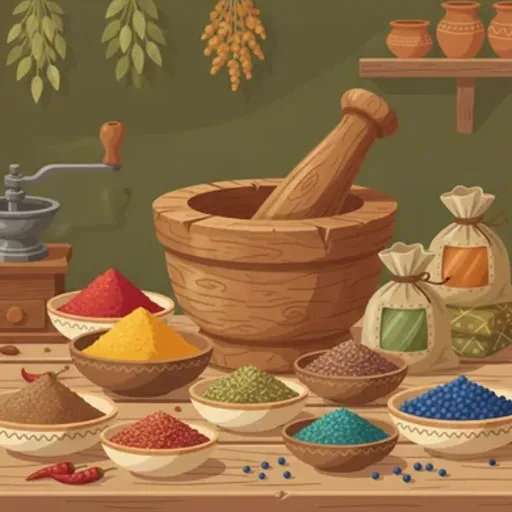
Home cooks with a blend people ask for, who are ready to sell shop by shop before they sell online.
Why now
Regional and 'home-made' masalas sell on WhatsApp and Instagram; small brands can reach loyal buyers without a distributor.
From people who did it
4 real founders
What founders went through.
People who opened a masala & spice powders brand or something close to it. One at a time — what they’d tell you first, then what worked and what didn’t.
Story 1 of 4
“Prioritize identifying a unique consumer insight and a sizable target addressable market before developing a product or brand.
— A masala products owner in Chennai
Started with
₹1 L
What worked
Customer insight, product differentiation, strong branding, effective distribution, and adapting to market trends (tailwinds).
What went wrong
Starting with a product without customer insight, infrequent consumption of the product, negative per-piece profit margins, and not staying long enough in the game to…
What they’d tell you
Focus on building a profitable business model where each unit sold generates profit, rather than relying solely on valuations or external funding.
What worked
Customer insight, product differentiation, strong branding, effective distribution, and adapting to market trends (tailwinds).
What went wrong
Starting with a product without customer insight, infrequent consumption of the product, negative per-piece profit margins, and not staying long enough in the game to catch a tailwind.
Launching products based on product excitement rather than genuine customer insight, leading to low purchase frequency and poor sales.
Underestimating the impact of pricing on customer perception, where a higher price can inadvertently position a product as a 'special occasion' item rather than an everyday essential.
Lesson
Focus on customer insights before product development. Build products that address frequent needs. Ensure positive per-piece profit margins. Stay persistent in the business to capitalize on market tailwinds. Understand that branding is a continuous process of building perception and emotion around a product. Be culturally aware of how your brand is perceived. Embrace the process of problem-solving and continuous improvement.
Their advice
Prioritize identifying a unique consumer insight and a sizable target addressable market before developing a product or brand.
Focus on building a profitable business model where each unit sold generates profit, rather than relying solely on valuations or external funding.
Story 2 of 4
“Maintain a clear vision and avoid compromises to effectively manage and grow an organization.
— A spices and ready-to-cook products owner in Nazareth · before this: Sales Officer/Area Sales Manager
Started with
₹50K
What worked
Clear vision, strong self-confidence, supportive wife, persistent effort, and ability to identify opportunities in challenges.
What went wrong
Lack of MBA qualification for top management in FMCG companies during that era, initial financial struggles, and external market challenges like tsunamis,…
What they’d tell you
Approach business with passion, as it transforms challenges into opportunities and makes the journey enjoyable.
What worked
Clear vision, strong self-confidence, supportive wife, persistent effort, and ability to identify opportunities in challenges.
What went wrong
Lack of MBA qualification for top management in FMCG companies during that era, initial financial struggles, and external market challenges like tsunamis, demonetization, and COVID-19.
Lesson
Challenges are opportunities for growth. Maintain a clear vision and ensure it's communicated to all employees. Prioritize quality and affordability. Understand customer needs through direct observation.
Their advice
Maintain a clear vision and avoid compromises to effectively manage and grow an organization.
Approach business with passion, as it transforms challenges into opportunities and makes the journey enjoyable.
Story 3 of 4
“For those looking to start a business or expand their product range, consider distributing our products, as we welcome new vendors.
— A sauces and pastes owner
What worked
Focus on quality, taste, affordability, and continuous product development (two new products annually).
What they’d tell you
Leverage online platforms for product sales to reach a wider audience, both domestically and internationally.
What worked
Focus on quality, taste, affordability, and continuous product development (two new products annually).
Lesson
The importance of taste, quality, and affordability in the food industry, and adapting to modern platforms like online sales.
Their advice
For those looking to start a business or expand their product range, consider distributing our products, as we welcome new vendors.
Leverage online platforms for product sales to reach a wider audience, both domestically and internationally.
Story 4 of 4
“Focus on providing high-quality products, as it builds trust and ensures customer satisfaction.
— A ready-to-cook food products owner in Thanjavur
What worked
Quality products, authentic regional tastes, no preservatives, convenience for working women and students abroad, cost-effective.
What they’d tell you
Explore opportunities in markets where fresh ingredients are scarce or expensive, as ready-to-cook products can be a significant convenience.
What worked
Quality products, authentic regional tastes, no preservatives, convenience for working women and students abroad, cost-effective.
Lesson
It took 8 years of R&D to create products without preservatives while maintaining authentic taste. It was challenging to get people to accept instant food initially.
Their advice
Focus on providing high-quality products, as it builds trust and ensures customer satisfaction.
Explore opportunities in markets where fresh ingredients are scarce or expensive, as ready-to-cook products can be a significant convenience.
Self-reported by founders in business-channel interviews, summarised and anonymised by us — not audited.
The honest part
Why these usually fail
1Launching a product without first learning what customers actually cook with
2A product people buy too rarely to build repeat sales
3Not enough capital to give shops the credit they expect
4Treating packaging and labelling as an afterthought
Both sides
The good and the hard
+Can start from home at small scale
+Long shelf life — low wastage
+Family recipes are a real edge
−Crowded shelf — big brands dominate
−Shops want credit and margin
−FSSAI and labelling rules apply
The real effort
What you need to be good at
Recipe consistency & batch qualitybasiclearnable on the job
Retail shop salesbasiclearnable on the job
Packaging & FSSAI labellingbasiclearnable on the job
WhatsApp / Instagram sellingbasiclearnable on the job